St Katharine Docks to Ratcliff: Boat-access Removals Guide
Moving along the Thames sounds straightforward until you're the one juggling timings, loading points, access permissions, and a sofa that seems to have grown overnight. This St Katharine Docks to Ratcliff: Boat-access Removals Guide is here to make that journey feel far less mysterious. Whether you are moving a flat, a few heavy pieces, or a full home with awkward access, the boat-access route can be a smart solution when roads are tight and time is short.
To be fair, most people do not need a lecture on moving. They need a practical plan. So this guide explains how boat-access removals can work between St Katharine Docks and Ratcliff, what to expect, what can go wrong, and how to prepare properly. Along the way, you will also find useful links to related planning, packing, and specialist moving support across Ratcliff.
Table of Contents
- Why St Katharine Docks to Ratcliff: Boat-access Removals Guide Matters
- How St Katharine Docks to Ratcliff: Boat-access Removals Guide Works
- Key Benefits and Practical Advantages
- Who This Is For and When It Makes Sense
- Step-by-Step Guidance
- Expert Tips for Better Results
- Common Mistakes to Avoid
- Tools, Resources and Recommendations
- Law, Compliance, Standards, or Best Practice
- Options, Methods, or Comparison Table
- Case Study or Real-World Example
- Practical Checklist
- Conclusion
- Frequently Asked Questions
Why St Katharine Docks to Ratcliff: Boat-access Removals Guide Matters
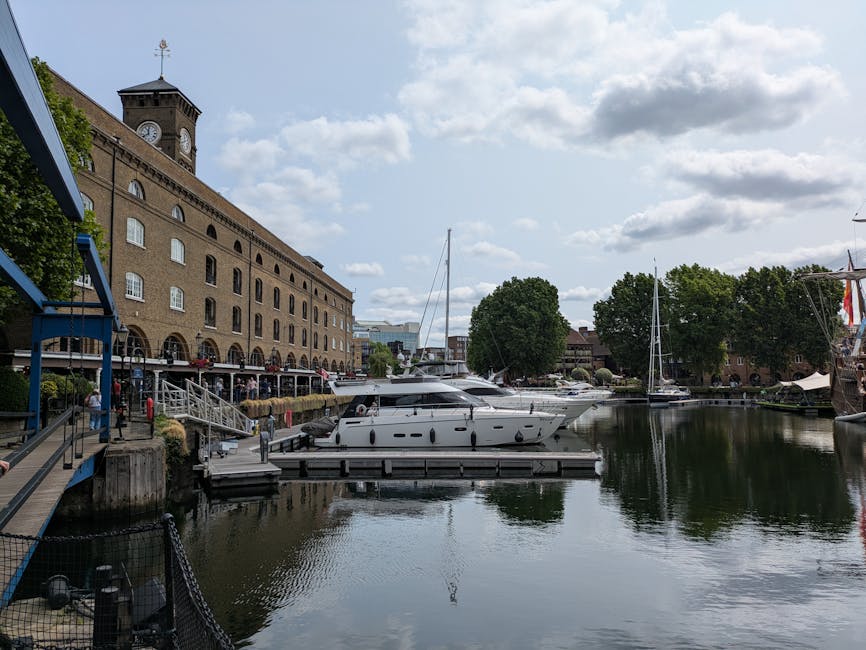
Boat-access removals are not a gimmick. In a riverside area, they can be the difference between a calm moving day and a messy chain of blocked access, parking stress, and repeated carrying from the wrong side of a building. St Katharine Docks and Ratcliff sit in a part of London where waterside routes, tight streets, limited stopping space, and building access rules can all shape the move.
That matters because the usual "just park outside" approach does not always work here. Some homes and commercial spaces are easier to reach from the river than from the road. Others may have loading bays that are restricted, narrow entrances, or time windows that make road-based removals awkward. A boat-access plan can reduce walking distance, simplify the handover of bulky items, and save a surprising amount of energy. Less back and forth. Less waiting around. Fewer grimaces when the lift is out of service, again.
There is also a practical resilience angle. If road access is disrupted by traffic, works, or local restrictions, water-based access may offer a useful alternative. That does not mean it suits every move, but it is worth understanding before you commit to a standard van-only plan.
If you are still shaping the overall move, it helps to review efficient moving preparation and the broader services overview so you can see where specialist support fits into the bigger picture.
How St Katharine Docks to Ratcliff: Boat-access Removals Guide Works
At a simple level, the move involves transferring belongings using a water-access point near the dockside, then completing the final handoff at the destination in Ratcliff. In practice, the process depends on how the property is arranged, what can safely be carried, and how the loading and unloading points line up with the route.
A typical boat-access removal has three stages:
- Pre-move assessment. Someone checks what needs moving, the size and weight of each item, and whether the dockside and receiving location can support the plan.
- Water-side loading and transit. Items are protected, carried carefully, and loaded in a way that reduces damage and keeps the team moving efficiently.
- Final delivery and placement. The load is transferred to the destination, often with special attention to stairs, communal entrances, lifts, or tight internal corridors.
The key thing to understand is that boat-access removals are usually about logistics, not novelty. The route is chosen because it solves a genuine access problem. If the destination in Ratcliff has better river or dock-side access than road access, the whole move can become simpler. If not, a mixed method may be better: some items by boat, some by van, depending on the size and timing of each part.
For homes with larger furniture, it is sensible to think ahead about whether items should be disassembled first. Our guide to furniture removals in Ratcliff is useful if you are moving wardrobes, tables, or other awkward pieces. And if the move involves boxed household goods, the packing and boxes service in Ratcliff can help you avoid that all-too-common situation where everything is packed... except the tape, which is somehow missing.
Key Benefits and Practical Advantages
There are several reasons people choose a water-access route for this part of London. The right one for you will depend on your property, your timing, and how much you want to do yourself.
- Better access where roads are awkward. Some riverside properties are much easier to reach from the water than from the street.
- Less congestion pressure. You may avoid the stop-start hassle that comes with road traffic and loading restrictions.
- Fewer long carries. If a van cannot stop close to the entrance, carrying heavy items for a long distance becomes tiring fast.
- Good fit for specialist loads. Furniture, musical instruments, fragile decor, and bulky appliances can all benefit from a carefully planned access route.
- Potentially smoother scheduling. In some cases, the route gives you more control over the move timing, especially when building access is fixed.
There is also a quiet advantage people sometimes forget: the move feels more organised. When access is planned properly, the day tends to feel less chaotic. You know where items are going, who is handling them, and what order things will happen in. That sense of control can make a big difference.
For many customers, the practical advantage is not just speed. It is less stress. Which, honestly, is half the battle.
If you are comparing service levels, take a look at man and van support in Ratcliff and local removal services to see which route matches the scale of your move.
Who This Is For and When It Makes Sense
Boat-access removals are not only for large properties or unusual projects. In fact, some of the most suitable moves are fairly ordinary on paper, just awkward in geography.
This approach makes sense if you are:
- moving between riverside homes with limited road access
- relocating from a flat where parking is difficult or heavily restricted
- transporting furniture that would be painful to drag through long internal routes
- moving business items from an office with awkward delivery access
- trying to avoid repeated lifting between a distant parking spot and the front door
- needing a flexible plan for mixed loads, where some items suit water access and others do not
It is also a strong option for students and renters who need a practical move without hiring a huge lorry. If that sounds familiar, the student removals page for Ratcliff can be a useful next step.
On the other hand, if everything fits into a standard van parked conveniently outside your door, you may not need this route at all. No need to force a water-based solution where a simple ground move will do. The best moving plan is the one that fits the real layout, not the fanciest one.
Step-by-Step Guidance
Here is a sensible way to plan the move from St Katharine Docks to Ratcliff without leaving everything to the last minute.
1. Survey the access points
Check the dockside access, the receiving entrance, and the path between them. Look at widths, steps, doors, lift sizes, and anything that might limit movement. A small detail can become a big problem if it is overlooked. A door closer, a low beam, or a narrow corner can force a repack on the spot.
2. Sort your items by size and fragility
Group items into categories: fragile, heavy, awkward, valuable, and everyday boxes. This helps the crew decide what needs padding, disassembly, or separate handling. It also reduces the chance of the one fragile lamp being stacked under something less cooperative.
3. Declutter before you pack
Do not spend money and energy moving things you no longer want. Decluttering is one of the easiest ways to make a waterside move easier. If you want a more structured approach, read strategic decluttering tips for a seamless move. You will usually find that one cupboard, one drawer, or one random box becomes the true surprise of the day.
4. Choose the right packing method
Use sturdy boxes, proper wrapping, and clear labels. Heavy items should go into smaller boxes rather than oversized ones that become impossible to lift. The move will feel calmer if every item is packed with handling in mind.
5. Prepare specialist items separately
Some items need more care than others. A piano, for example, should never be treated like a standard piece of furniture. If you have one, it is worth reading why DIY piano moving can go badly and considering specialist piano removals in Ratcliff. Likewise, beds, mattresses, and frames often need dismantling and wrapping before movement; the mattress and bed frame moving guide is worth a look.
6. Confirm timings and responsibility
Make sure everyone knows who is meeting whom, where the handover happens, and what time the access window starts. This is one of those boring things that saves the day. A lot of moving stress comes from vague timing, not from lifting itself.
7. Protect the destination
Ratcliff properties often involve shared entrances, lifts, or tight hallways. Protect floors, walls, and corners before heavy items arrive. If you are leaving a place after a tenancy, the guide to a spotless home before you move out can help you wrap up cleanly.
8. Decide what goes into storage
Not every item needs to be unpacked immediately. If you are between homes, waiting for a renovation, or simply simplifying the move, storage in Ratcliff may be a sensible part of the plan.
Expert Tips for Better Results
Good removals are usually won before the first box is carried. That sounds dramatic, but it is true.
- Use smaller loads for heavy items. A box filled with books can become a back problem very quickly. Keep heavy contents in compact boxes.
- Label both the side and the top. When boxes are stacked, top labels disappear. Side labels save time later.
- Wrap corners and edges. Table legs, shelves, and mirror frames all benefit from extra protection.
- Keep an essentials bag separate. Snacks, water, keys, charger, paperwork, medication, and basic tools should not be buried in a box marked "misc."
- Check whether anything needs professional handling. Not every item is a DIY job. Heavy lifting, awkward furniture, and delicate pieces often move better with trained help.
If you are doing any lifting yourself, do not rely on bravado. The body has opinions about that sort of thing. Our guide to heavy lifting on your own and the piece on kinetic lifting methods are useful reminders that technique matters more than ego.
One more practical point: if something feels like it needs three people, a strap, and a prayer, it probably does. That is the moment to pause and reassess.
Common Mistakes to Avoid
Boat-access moves are efficient when planned properly. They become frustrating when the obvious bits are ignored.
- Not measuring access points. A few centimetres can decide whether a sofa turns the corner or stops dead.
- Packing too much into one box. Heavy boxes are slow, unsafe, and awkward to move through narrow routes.
- Assuming the water route solves every issue. It may help with access, but it does not remove the need for good packing, coordination, and timing.
- Leaving fragile items unprotected. River-adjacent moves can involve vibration, movement, and more handling than expected.
- Forgetting building rules or permissions. In shared or managed buildings, access rules matter more than people think.
- Overlooking appliance care. If you are moving a freezer or similar appliance, use proper preparation steps. The advice on unused freezer care can help avoid smells, leaks, or avoidable damage.
Another common slip is trying to do everything on the day. That always sounds doable on Monday morning. By Friday afternoon, not so much. Better to prepare earlier than you think you need to.
Tools, Resources and Recommendations
You do not need a warehouse full of gear, but a few practical tools make this kind of move much easier.
| Tool or Resource | Why It Helps | Best Use |
|---|---|---|
| Strong moving boxes | Protects items and keeps weight manageable | Books, kitchenware, mixed household items |
| Bubble wrap and paper | Reduces knocks and surface damage | Glass, frames, lamps, decor |
| Furniture blankets | Helps prevent scratches and scuffs | Sofas, tables, wardrobes |
| Tape, labels, and markers | Makes sorting and unloading faster | All packed items |
| Straps and trolleys | Improves control over heavier pieces | Large boxes, appliances, flat-pack items |
It also helps to use service pages that match the type of move you are planning. For example, flat removals in Ratcliff work well for apartment moves, while house removals in Ratcliff are better for larger household transitions. If your timing is tight, same-day removals may also be worth checking, depending on availability.
And if you want to compare service levels or understand the supplier a bit better before booking, the about us page and insurance and safety information can give useful reassurance.
Law, Compliance, Standards, or Best Practice
For boat-access removals, the main compliance considerations are usually practical rather than dramatic. You are typically dealing with building rules, access permissions, safe lifting practices, property protection, and responsible handling of goods. In a London setting, those details matter.
Best practice usually includes:
- checking access rights and booking requirements for the dockside or waterfront point
- confirming whether the destination has lift access, stair-only access, or time-limited entry
- ensuring items are packed so they can be carried safely without unnecessary strain
- using proper lifting technique and team coordination
- respecting building rules for communal spaces, floor protection, and noise
If you are hiring help, it is sensible to ask how health and safety is handled on moving day. The same applies to insurance cover and damage processes. You do not need a legal lecture; you just need clear answers. That is the helpful bit.
For customers who like to read the small print before booking, these pages are worth a look: health and safety policy, terms and conditions, payment and security, privacy policy, and accessibility statement.
Options, Methods, or Comparison Table
Not every move needs the same method. The best route depends on the property, the load, and the access conditions on both sides.
| Method | Best For | Strengths | Limitations |
|---|---|---|---|
| Boat-access removal | Riverside properties with difficult road access | Can reduce carrying distance and bypass street constraints | Needs careful coordination and suitable access points |
| Van-only removal | Standard homes with easy roadside parking | Simple, familiar, often quicker to arrange | Can be awkward where access is restricted |
| Mixed-method move | Moves with both easy and hard-to-access items | Flexible and efficient for varied loads | Requires more planning and clear item sorting |
For many people, the mixed method is the most realistic. A few items go by the route that suits them best, and the rest are moved by the most practical means. Not glamorous. Very effective.
Case Study or Real-World Example
Here is a realistic example based on the kind of move that often comes up in this part of London.
A renter in a riverside flat near St Katharine Docks needed to move to a property in Ratcliff. Road access at the old address was awkward, with limited stopping space and a narrow loading area that would have meant long carries. The new property had better water-side access, but the internal hallway was tight and the lift was small. Not ideal, but workable.
The move was made easier by splitting the load into three groups:
- Group one: boxes and lighter household items packed early and clearly labelled
- Group two: a bed frame, mattress, and compact furniture wrapped and disassembled where needed
- Group three: fragile items and valuables set aside for extra protection and direct handling
The result was a steady move with fewer bottlenecks. There was still a bit of unavoidable faff, of course. There always is. But because the access plan had been thought through, nothing major derailed the day. The renter also avoided the common mistake of leaving cleaning until the last minute by following a pre-move clean-down checklist, which made the handover easier.
That is the main lesson here: the route itself helps, but the real win comes from preparation.
Practical Checklist
Use this checklist to keep the move on track.
- Confirm pickup and drop-off access points
- Measure doorways, stairwells, and lift dimensions if needed
- Sort items by weight, fragility, and priority
- Declutter before packing
- Gather boxes, tape, blankets, labels, and wrapping materials
- Disassemble bulky furniture where appropriate
- Protect valuables and fragile items separately
- Check whether any items need specialist handling
- Decide what goes straight to the new property and what goes into storage
- Keep documents, keys, chargers, and essentials in one easy-to-reach bag
- Confirm timing, contact details, and any building rules
- Do a final walk-through of the old property before leaving
If you want a broader moving plan that ties the whole day together, the step-by-step guide to a stress-free house move is a strong companion read.
Conclusion
Boat-access removals between St Katharine Docks and Ratcliff are not about making the process fancy. They are about making it workable. When road access is tight, when bulky furniture needs a better route, or when you want to reduce the grind of long carries, this approach can be a very sensible choice.
The best results usually come from simple things done well: measuring properly, packing carefully, planning timings, and choosing the right kind of help for the items you are moving. That combination saves energy, protects your belongings, and makes the day feel more manageable. And let's face it, that is what most people want from a move.
Get a free quote today and see how much you can save.
For tailored local help, it is worth comparing the full range of removals in Ratcliff and checking the wider removal company options before you decide. A good move starts with a clear plan, and a calm one ends with fewer regrets. Nice, simple, done.
Frequently Asked Questions
What is a boat-access removal from St Katharine Docks to Ratcliff?
It is a move that uses a water-access or dockside route to help transfer items between the two locations, especially where road access is awkward or less efficient.
When does a boat-access move make more sense than a van-only move?
It usually makes more sense when parking is limited, the route is hard to reach by road, or the property layout makes carrying items from a street vehicle impractical.
Can I move large furniture this way?
Yes, often you can, but bulky items should be checked in advance for size, weight, and handling needs. Some furniture may need dismantling first.
Do I need to pack everything myself?
Not necessarily. Many people handle basic packing but ask for help with fragile or difficult items. The right split depends on how much time, energy, and confidence you have.
Is boat-access removals suitable for flats?
Yes, especially for flats with awkward road access, shared entrances, or limited parking. It can be a strong option for apartment moves in riverside areas.
How far in advance should I plan this kind of move?
As early as possible. Even a straightforward-looking move benefits from early access checks, packing time, and confirmation of who is responsible for each stage.
What items need special care?
Fragile decor, mirrors, pianos, mattresses, sofas, appliances, and anything unusually heavy or awkward should be handled with extra care.
Can I combine storage with a boat-access move?
Yes. That can be a smart solution if your new home is not ready, if you are decluttering, or if you only need part of your belongings moved immediately.
How do I avoid damage during the move?
Use proper packing materials, protect corners and surfaces, label boxes clearly, and make sure heavy items are moved with suitable lifting methods and enough help.
Are same-day bookings possible?
Sometimes they are, depending on availability and the scale of the move. If you need urgent help, check same-day removals in Ratcliff as soon as you can.
How do I choose the right service for my move?
Start with the size of the load, the access conditions, and whether you need packing, storage, or specialist handling. Then compare the relevant local pages rather than trying to force one generic solution.
What should I ask before booking?
Ask about access planning, insurance, timing, item handling, payment, and what happens if the route or building access changes on the day. Clear answers are a good sign.